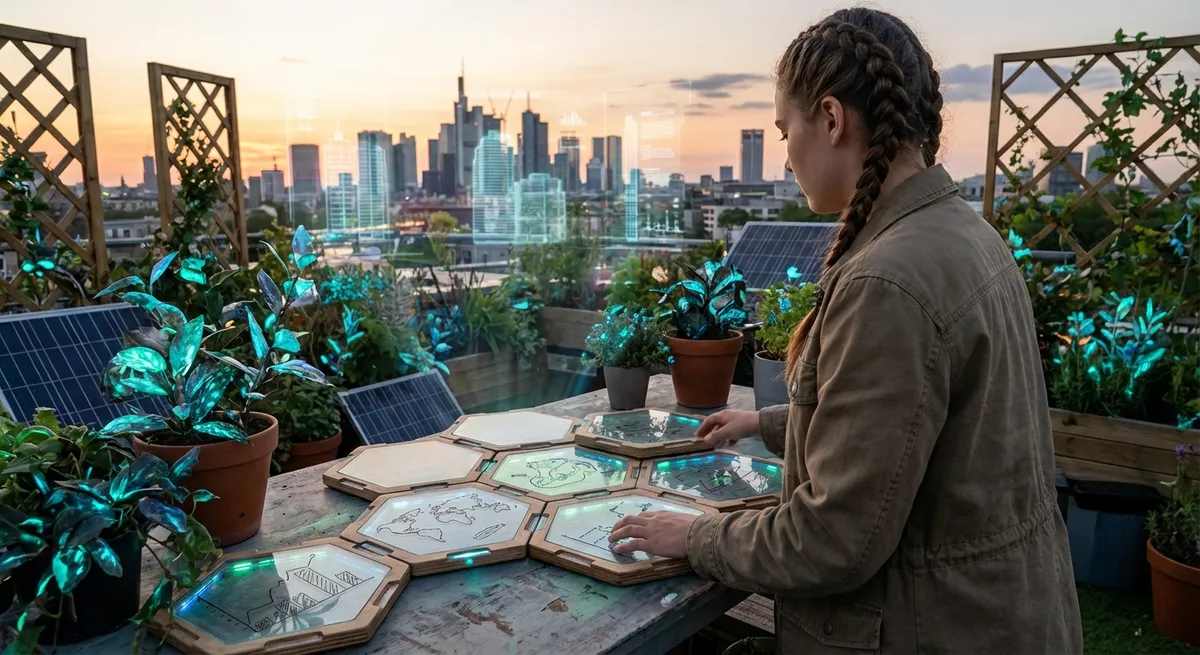
Future-wise life planning is less about predicting what’s coming and more about building the capacity to respond. It’s a shift from locking in fixed goals to cultivating flexible structures, habits, and relationships that can carry you through multiple futures—not just the one you’re hoping for.
Below are five smart strategies to plan for a future that’s fluid, surprising, and still deeply yours.
1. Shift From a Single Path to a Portfolio of Possible Futures
Traditional planning pushes you to pick one destination and back-cast from there: “In 10 years I want X, so I’ll do Y now.” That can work in stable environments, but in a fast-changing world, overcommitting to one version of the future can trap you.
A more resilient approach is to hold a portfolio of possible futures. Instead of one rigid story, you keep three to five plausible life narratives in mind: different ways your work, location, relationships, or priorities could evolve. You don’t have to rank them; you treat them as parallel hypotheses.
For example, your portfolio might include:
- A high-growth career path in your current field
- A slower, more flexible path that prioritizes caregiving or location independence
- A skill-based shift into an adjacent industry or sector
- A scenario where health, economic shifts, or automation disrupt your current work
You then make present-day choices that keep multiple futures open rather than prematurely closing doors. That might mean maintaining your professional network even if you’re happy in your role, keeping a financial buffer for experimentation, or staying current with adjacent skills you’re not yet “using.”
This mindset trades certainty for optionality—the ability to pivot when a new opportunity (or disruption) appears. In a volatile world, optionality is a form of quiet power.
2. Build Adaptive Capacity, Not Just Fixed Skills
Planning used to revolve around acquiring stable credentials: degrees, licenses, titles. Those still matter, but their half-life is shrinking. Many of tomorrow’s roles will look different from today’s job descriptions, and the knowledge powering them will update faster than most formal programs.
To plan wisely, shift focus from “What do I need to know?” to “How fast can I learn, unlearn, and re-learn?” That’s adaptive capacity—your ability to keep updating yourself as reality changes.
You can intentionally design for this by:
- Cultivating learning routines rather than sporadic upgrades. For example, a weekly “learning block” for reading journals, taking micro-courses, or experimenting with new tools.
- Learning in public through writing, posting small experiments, or sharing drafts of your thinking. This attracts feedback and opportunities you can’t predict in advance.
- Practicing deliberate upskilling in areas with cross-cutting value: data literacy, AI fluency, communication, systems thinking, and ethical reasoning. These plug into many futures, not just one job.
- Embracing beginner status regularly. Put yourself into environments where you’re not the expert—new domains, communities, or tools. Comfort with “not knowing yet” is a future-proof trait.
Instead of asking, “What career will be safe in 20 years?” ask: “What learning habits would make almost any future navigable?” Then architect your weeks around those habits, not just your current tasks.
3. Design Systems Around You, Not Just Goals Ahead of You
Goals are attractive because they’re clear: run a marathon, hit a savings number, reach a title. But goals are snapshots of a particular moment’s assumptions. If your context changes, they can become obsolete—or worse, misleading.
Systems are different. They’re the recurring patterns, environments, and constraints that quietly shape how you live: your sleep, what you see daily, who you talk to, and how you make decisions. Systems are easier to adapt than rigid targets—and they keep working even when your goals evolve.
To future-proof your life planning, zoom out from “What do I want?” and ask “What systems would consistently move me toward better futures, even ones I haven’t imagined yet?”
Examples of future-wise systems include:
- Information systems: Curated news, newsletters, or podcasts that keep you updated on technology, work, health, and climate trends—without overwhelming you.
- Relationship systems: Regular check-ins with diverse people whose work or life views stretch yours—across generations, industries, and cultures.
- Energy systems: Sleep, movement, nutrition, and mental health practices that sustain you long enough to benefit from a longer lifespan and shifting careers.
- Decision systems: Simple rules that reduce friction and bias, like “no major career decision without three external perspectives” or “wait 24 hours before acting on big financial moves.”
Instead of scripting your entire future, invest in systems that keep you adaptive, sane, and oriented—no matter how the map changes.
4. Make Uncertainty a Design Input, Not Just a Source of Anxiety
Most of us treat uncertainty as something to minimize or ignore. But when the future is genuinely unpredictable, assuming stability is actually the risky move. Uncertainty is not a bug in modern life planning—it’s a core design constraint.
You can start by naming the uncertainties that actually matter to your life, such as:
- How AI will change your industry
- How climate risks might affect where you live
- How long you might want (or need) to work
- How caregiving responsibilities could emerge over the next decade
- Choosing a city or neighborhood with lower long-term climate risk and better infrastructure.
- Keeping your skills flexible enough to move across roles as automation or AI reshapes tasks.
- Structuring finances to support periods of reduced income for caregiving, study, or relocation.
- Creating “if/when” protocols: if X happens, these are my first three moves.
Once they’re named, you can design around them instead of pretending they don’t exist. That might look like:
You don’t need to predict specific outcomes. You need to acknowledge a range of plausible futures and ask: “What choices today would perform well across that range?” That’s the essence of robust life design—less about precision, more about resilience.
5. Integrate Meaning and Optionality Instead of Trading Them Off
A common trap in life planning is treating meaning and flexibility as rivals. Some paths feel rich with purpose but narrow and fragile; others feel flexible but empty. The future will reward people who can combine depth of meaning with breadth of options.
You can start by decoupling what feels meaningful from how it’s expressed. Meaning often lives in underlying drivers—creating, teaching, healing, protecting, building, exploring—while the actual expression (which job, which project, which setting) can shift many times over a long life.
Forward-looking planning asks:
- What types of contribution or experience feel deeply energizing to me across different contexts?
- In how many formats could that meaning be expressed—employment, self-directed projects, community roles, mentoring, building tools, policy, art?
- How can I design my skills and network so that if one expression becomes unviable (due to automation, geography, health, or burnout), others remain open?
For instance, someone who finds meaning in “helping people make better decisions” could express that as a manager, coach, facilitator, researcher, designer, or policy analyst. As technology and industries shift, that person can reconfigure their life without abandoning the core of what matters to them.
The aim is to build a life where your sense of purpose isn’t hostage to any single employer, role, or institution. That’s both psychologically grounding and strategically smart in an era where structures around us will keep evolving.
Conclusion
Life planning in a fast-changing world isn’t about locking in a flawless blueprint. It’s about designing a way of living that can absorb surprise, metabolize change, and still feel coherent and meaningful to you.
A portfolio of possible futures keeps you from over-betting on a single storyline. Adaptive capacity ensures you can keep updating yourself as the world updates around you. Systems give stability without rigidity. Treating uncertainty as a design input turns anxiety into strategy. And integrating meaning with optionality lets you carry what matters most across many possible lives—not just one.
You don’t need perfect foresight to be future-wise. You need habits, structures, and relationships that let you keep adjusting with intention. Your plan doesn’t have to predict the future; it just has to keep you ready to meet it.
Sources
- World Economic Forum – Future of Jobs Report 2023 – Analysis of emerging skills, job trends, and how technology is reshaping work globally.
- McKinsey Global Institute – The Future of Work After COVID-19 – Explores scenarios for remote work, automation, and sector shifts influencing long-term career planning.
- MIT Sloan Management Review – The New Elements of Digital Transformation – Discusses how digital change affects organizations and individuals, relevant for building adaptive capacity.
- Pew Research Center – AI and the Future of Humans – Expert perspectives on how AI may impact society, work, and human agency.
- American Psychological Association – Building Your Resilience – Evidence-based guidance on psychological resilience, essential for navigating uncertainty and change.