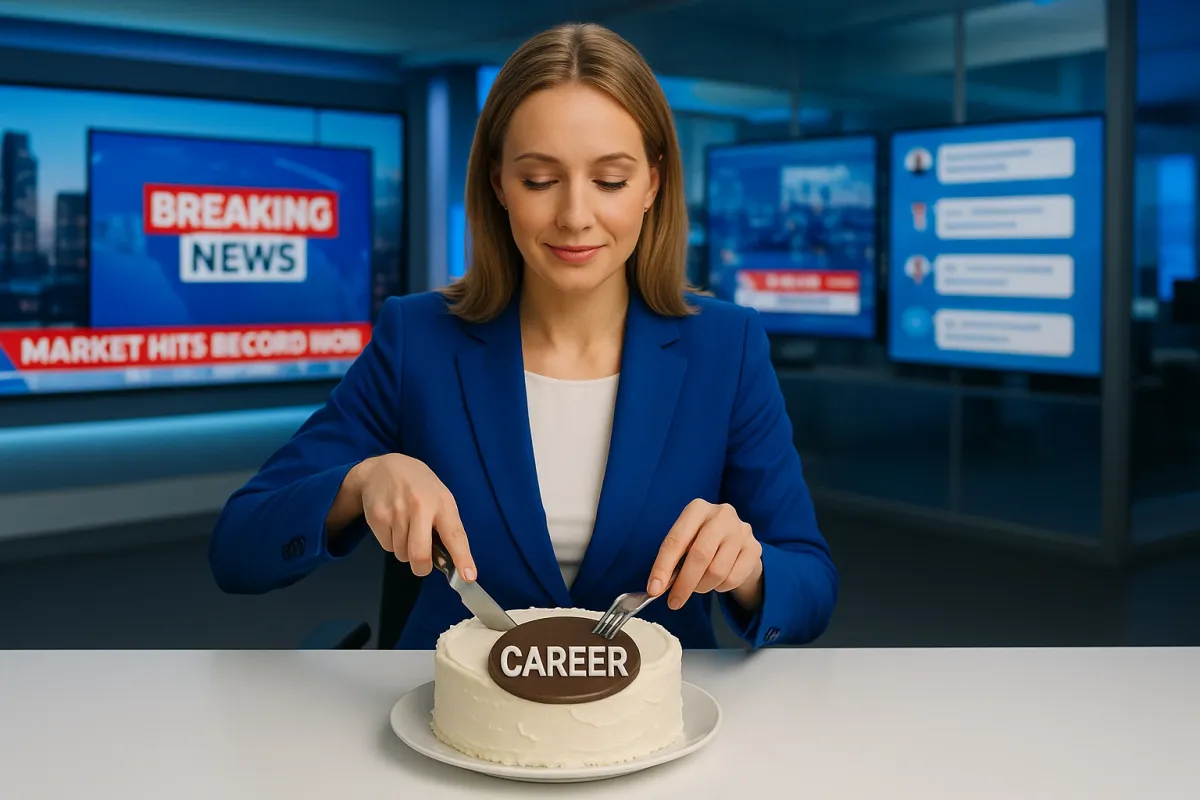
Price took what could have been routine harassment about her body and presence on air and flipped it into content, community, and career capital. Instead of shrinking, she amplified. Instead of defending, she reframed. And in doing so, she modeled the kind of future-proof career strategy most of us were never taught in school.
In an era where personal brand, audience trust, and digital resilience can determine your next opportunity, her story isn’t just internet drama—it’s a blueprint. Here’s how to translate the “cake news” moment into your own long-term career growth plan.
Turn Criticism Into Career Data, Not Personal Damage
When Price read out hostile comments on air with full anchor composure, she did something powerful: she turned criticism into content and conversation. Rather than silently absorbing the negativity, she treated it as raw material.
In your career, online or offline, you will be misunderstood, underestimated, or attacked—especially if you’re visible, ambitious, or different. The future-ready response is not to deny that it hurts, but to decide how you’ll use that information. Separate the signal (legitimate feedback, real expectations, the emotional climate of your audience or stakeholders) from the noise (projection, bias, trolling). Build a simple practice: when criticism shows up, write it down, strip out the emotional sting, and ask three questions—What truth, if any, is in here? What bias is this revealing about my environment? What opportunity does this create for me to clarify, educate, or pivot? Over time, this skill becomes a professional superpower: you stop being whiplashed by other people’s opinions and start steering with better data.
Design a Public Presence That Can Grow With You
The viral clip worked because Price already had a defined presence: professional, self-aware, witty, and confident in her lane. That let her frame the moment on her terms. In a world where journalists, engineers, teachers, and analysts are all building audiences on TikTok, LinkedIn, YouTube, and niche platforms, treating your online self as an afterthought is no longer neutral—it’s a liability.
Think of your digital presence as a living portfolio of who you’re becoming. You don’t need to be an influencer, but you do need coherence. Start by picking one or two platforms that align with the spaces you want to grow into, not just where you hang out today. Then define three pillars you’ll show up around—for example, “behind-the-scenes in my industry,” “learning in public,” and “human, not-perfect moments.” As your skills and interests evolve, your content can evolve too, but the spine remains: this is who I am, this is what I care about, this is how I think. Recruiters, collaborators, and future clients are increasingly searching you before they search job boards; future-proof your career by making sure what they find is intentional, not accidental.
Build Emotional Resilience As A Core Career Skill
Price’s calm delivery of hostile comments wasn’t just good TV—it was a display of emotional regulation in real time. She didn’t minimize the cruelty, but she didn’t let it dictate her narrative either. As work becomes more public, more remote, and more entangled with algorithms and anonymous feedback, emotional resilience isn’t “soft.” It’s structural.
Future career growth will reward those who can stay centered in volatile conditions: layoffs trending on X, markets swinging, industries being reshaped by AI, and yes, comment sections that forget you’re a human. Make resilience part of your career development plan, not just your self-care plan. That can mean building a small, trusted circle that sees you beyond your job title; practicing “response lag” when emotions are high (never replying to a triggering email or comment immediately); and setting explicit boundaries with tech—quiet hours, no-notification blocks before big presentations, or rules for what kinds of online engagement you won’t participate in. When your nervous system is less hijacked, you make sharper strategic decisions: which risks to take, which rooms to leave, and which opportunities to double down on.
Treat Your Story As Strategic Career Infrastructure
What made the “cake news” saga spread was not just the humor; it was the story arc: a woman in a highly scrutinized field confronts body-shaming and turns it into empowerment. Narrative travels further than data. That’s as true for careers as it is for viral videos.
Too many professionals still talk about themselves like a LinkedIn auto-fill: job titles, responsibilities, dates. The future job market—especially in creative, tech, and hybrid roles—will increasingly favor those who can articulate a compelling throughline: why you do what you do, how you think, and where you’re going next. Craft a simple personal “logline” that you can adapt: “I help X do Y, by Z,” or “I’m exploring the intersection of A, B, and C.” Then, deliberately collect stories from your work: a moment you changed your mind, handled something hard well, or learned from a miss. Share them in small ways—portfolio notes, interview answers, short posts. Over time, you’re not just listing experience; you’re building a narrative universe around your professional life. That’s sticky. That’s memorable. That’s promotable.
Future-Plan Your Career Around Visibility, Not Just Skills
The classic advice says: get good, then the world will find you. The internet says: be seen, then prove you’re good. The truth for the next decade of careers lies in the tension between both. Price’s technical skills as a broadcaster got her in the door; her visible handling of a difficult moment is what expanded her reach far beyond her local market.
Your future planning should combine depth and display. Yes, double down on real competency—learning AI tools in your field, honing domain expertise, staying ahead of regulatory or technological shifts in your industry. But add a visibility layer by asking: Who actually knows that I’m good at this? How would someone in another city—or another sector—discover me? This might mean speaking at a niche online event, posting regular breakdowns of trends in your space, mentoring publicly in a community, or open-sourcing small pieces of your work. Think of visibility as a diversified opportunity engine: every authentic signal you send into the world is a future connection point for people, projects, and roles you can’t yet see.
Conclusion
The viral “cake news” moment wasn’t just a clapback; it was a case study in how modern careers are forged in public. Victoria Price didn’t choose the comments, but she chose the frame—and that choice generated attention, solidarity, and new possibilities.
Your path may never involve a teleprompter or a TikTok storm, but the underlying shifts shaping her career are shaping yours too: work and identity are more visible, criticism travels faster, and your story can either be something that happens to you or something you co-author.
Future-wise career growth won’t belong only to the smartest or the most qualified on paper. It will belong to those who can stay grounded under scrutiny, design a public presence that reflects their evolving ambitions, and turn every piece of feedback—fair or unfair—into direction, not defeat.
You don’t have to wait for a viral moment to start. Begin now: decide what you stand for, how you’ll show up, and which parts of your journey you’ll share. In a noisy world, intentionality is the new edge.